



Blog
Why variegated Monstera revert, and what to do about it

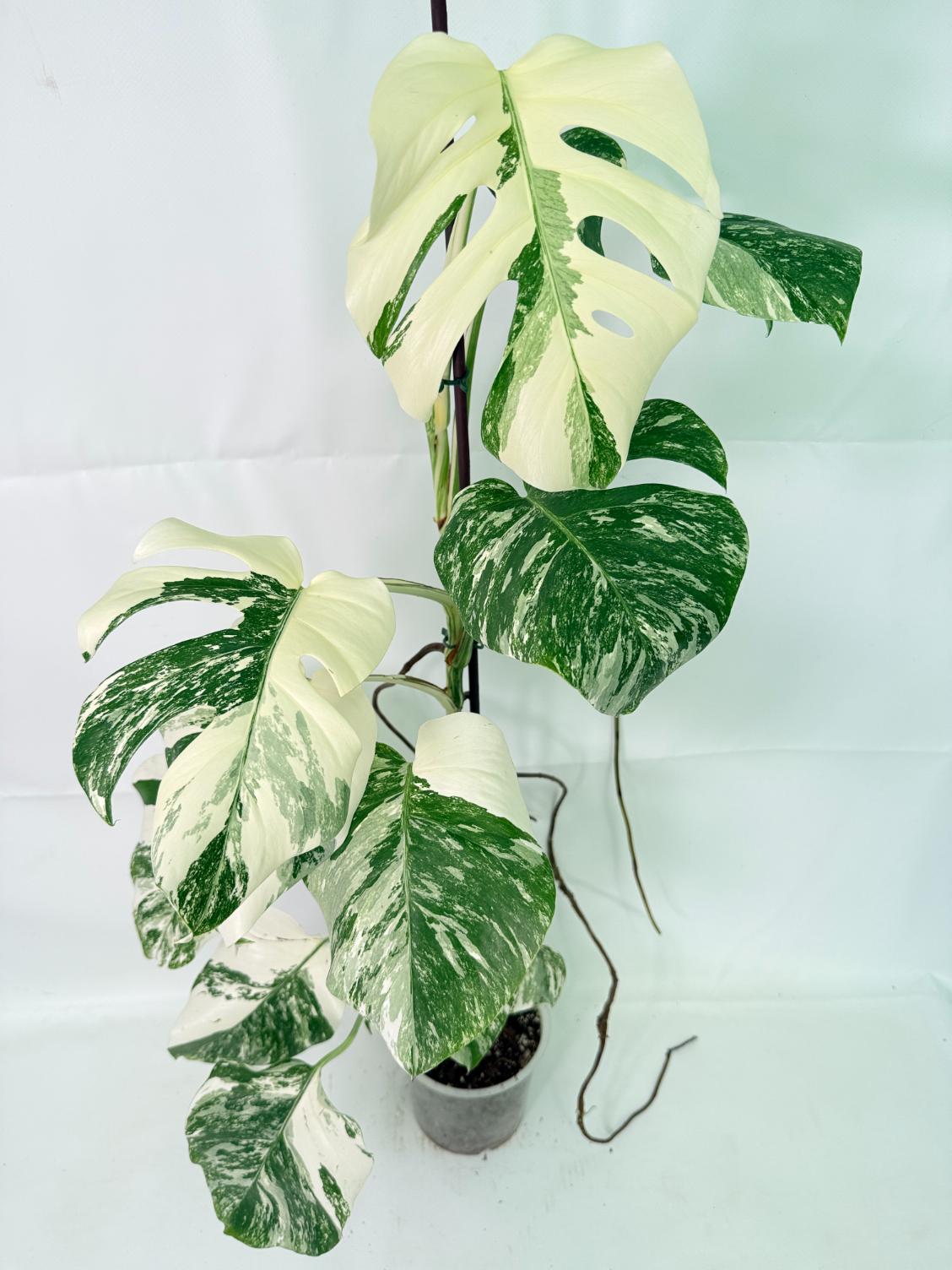
Variegation is the reason these plants cost what they cost, and it is also the thing new owners worry about most. Here is what actually drives it, and what you can do when a plant starts putting out plain green leaves.
What variegation actually is
In an albo Monstera or a Yellow Flame Philodendron, variegation is a genetic mosaic: some cell lines in the growing point carry the ability to make chlorophyll and some do not. Each new leaf is built from whichever cells happen to be in play at that node, which is why the pattern differs leaf to leaf on the same plant, and why no one can promise you a specific pattern on a leaf that has not grown yet.
White tissue carries no chlorophyll. It is passenger weight: beautiful, and paid for by the green parts of the plant.
Why plants revert
A plant that produces a fully green leaf is not broken and it has not been mis-sold. Usually one of three things is happening:
- Low light. A plant short of light leans on the cell lines that can photosynthesise. Green growth is the plant solving an energy problem.
- The node it grew from. Growth continues from the last node; if that node sat on the green side of the mosaic, the leaves that follow tend to be green too.
- Stress after a move. New environment, new watering rhythm, a repot — the first leaf or two afterwards is often less marked than the ones before.
What to do about it
Give it more light first. Bright indirect light, consistently, is the single biggest lever. Most reversion in a home is a light problem wearing a genetics costume.
Then prune, deliberately. If the plant has produced two or three fully green leaves in a row, cut back to a node that sits below a well-variegated leaf and let it push again from there. Cut just above the node, keep the aerial root attached to the cutting if you are propagating it, and expect the plant to take a few weeks to respond.
Do not chase the extremes. A near-white leaf looks spectacular and contributes almost nothing. Plants that go too far that way stall and eventually decline; a leaf that is roughly half marked is the sweet spot for both looks and vigour.
The care that keeps variegation stable
- Bright indirect light for as much of the day as you can manage — supplementary lighting through a northern winter is worth it.
- A chunky, free-draining aroid mix, watered thoroughly and then allowed to dry back at the surface.
- Warmth above roughly 60 °F and no cold draughts.
- A dilute balanced feed through the growing season; white tissue burns easily, so err on the weak side.
What we can and cannot promise
We photograph every plant individually, so what you see is what arrives: that leaf, that pattern, that size. What no honest seller can guarantee is the pattern of leaves that have not grown yet — that depends on your light, your watering and where you prune.
What we do guarantee is the plant itself. If it arrives damaged or fails to establish within 30 days despite reasonable care, we replace it or refund you. The details are on our guarantee page.